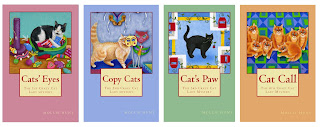
Writing fiction should be simple, right? After all, we’re
just making it up as we go along.
Not really. As much as our story drives us, a writer needs
to keep it within the realm of the believable, and nothing messes with
believability as much as a mistake in continuity. Where we can be forgiven
for taking our hero off to Mars in a pink, telepathic spaceship, we will be called out for switching out the breed of her
cat.
It gets even more complex when writing a series. Yes, we really do have to remember
Aunt Mae’s birthday is in September, that Joan’s favorite color is orange, and that
the hero’s nemesis’ brother’s son (who only appeared briefly in book one) has a
dog named Joe. These things are important, crucial even, because our readers remember details, sometimes consciously,
sometimes subconsciously. Unless we want to risk pulling them out of the story
(and losing them forever), we need to keep it straight.
There are probably as many ways to keep track of story specifics as there are authors. Besides the many organizational computer programs, there are
paper and file folders, index cards, cork boards, white boards, and anything
else that can form a list. Here is what
I do for my Crazy Cat Lady cozy mystery series:
Physical:
·
Vintage tray with notes I make on scraps of
paper.
·
Plastic tray and file folders of things I’ll
probably never look at again.
·
Cork board for same, only pretty.
Digital, general:
·
Excel and Word files on Desktop, in Documents,
and hidden other places where I will never find them, should I remember to
look.
Digital, working:
Some files I keep open all the time, referring and
updating them constantly. When I finish the book, these get condensed or retired, but saved… forever.
·
Outline:
This is not an outline in the usual sense but one I create as I write. In it, I
note each chapter, page, characters, and a brief plot description.
This is useful for finding things later. Plus it lets me tell people I really do work
from an outline.
·
Cast of
current characters: I have a master list of all
characters wo have ever appeared in a story, but this one lists only the characters in the current book. It is broken down into 2 sections: New characters and recurring
characters. This is also where I note features of important places such as
Lynley’s house. When I finish the book, this info will be incorporated into the
master list.
·
Notes:
In this document, I make note of anything that comes to mind, from overused
words to details I need to check in the previous books. Sometimes I get
inspired, and the color-coding begins.
· Lynley’s injuries and catastrophic incidents: Because the hero of my series is
always hurting herself, I keep a list. I mean, how many times can a
sixty-year-old cat shelter volunteer break her left arm and still have it come
off convincingly?
·
Extra:
It kills me to eliminate any text I’ve worked so hard to write, but it’s required. Some sentences are superfluous; some paragraphs misleading. I may need to switch things around. The extra file is where I paste everything I cut so I can get it back
if I change my mind. I never do, but it makes me feel better to know nothing is
lost. This file gets deleted once I finish the book and have forgotten what was
so damned important about those snippets in the first place.
So though fiction may seem like it should write itself,
the work and organization that goes into it makes the difference between creating chaos
and a real, believable world. How important is detail? Just ask a Trekkie.
How do you keep your story straight?
*The lovely cover model is my foster cat Jenny, who is
not such a great help when it comes to organization.
Check out
more blogs by Mollie Hunt, Cat Writer at:
Happy
reading!